
Free AI Image Summarizer

AI Image Summarizer

Upload an image and get two things back: the text that was inside it, and a summary of what that text is saying. Useful when the words are trapped in a picture.

  • Screenshots, charts, notes, and infographics
  • The text comes out selectable, not as a picture
  • A summary on top of the extracted text
  • Works on long screenshots and dense slides
Read an image

Information That Cannot Be Copied

A screenshot is the least useful form of information ever invented, and it is how most of it travels.

Important things arrive as pictures constantly: a screenshot of a table someone sent, a photographed whiteboard, a chart pasted into a group chat, a long thread captured in one image. The information is all there and none of it can be used. It cannot be selected, searched, quoted, or dropped into a document without retyping. This tool reads the text out of an image and returns it as selectable words, together with a summary of what the image is actually telling you, which is often the faster way in when the picture is dense.

What the Image Summarizer Does

Two outputs from one picture, because a picture of text is almost always needed in both forms.

Read the text inside an image

Screenshots, slides, photographed pages, whiteboards, and infographics all carry text that cannot be selected. It is read out and returned as real, copyable words.

Summarize what the image is saying

Beyond extraction, the content is summarized: what a chart argues, what a dense page of figures means, what the point of the infographic is.

Turn a picture into something searchable

Once the words are text, a name, a date, or a figure can be found by searching. That is what makes an image usable in a set of notes rather than a dead file.

Handle long screenshots and dense slides

Images that run far past a single screen, and slides packed with content, are read as a whole rather than cropped down to whatever fits.

Read text in another language

The language of the text is identified, and the output language is your choice, so an image sent from another market can be read in yours.

Work on handwriting, within reason

Clear handwriting and printed notes come through reliably. Rushed writing, faint pen, and photographs taken at an angle are where accuracy falls, so those pages are worth checking.

AI Image Summarizer

AI Image Summarizer

@image-summarizer

The Extracted Text and the Summary Are Different Things

The extracted text is exactly what was written in the image, returned as real words you can select, copy, and search. The summary is a reading of it: what the chart is showing, what the notes are about, what conclusion the infographic is arguing for. These serve different needs. If you need a figure, a name, or a serial number, the extracted text is what you use, because it is the image's own content. If you need to know what a dense page of numbers is telling you, the summary is the faster path, and the extracted text sits underneath it for the details.
Read an image
Text extracted from an image alongside a summary of it
AI Image Summarizer

AI Image Summarizer

@image-summarizer

What Kind of Image Works Well

The reader handles screenshots, slides, photographed documents, whiteboards, charts, and infographics, and it copes with long screenshots where the content runs far beyond a single screen. Text printed or typed comes through best. Handwriting is read when it is reasonably clear and gets unreliable when it is rushed, which is worth knowing before relying on a photographed page of notes. Images containing little or no text, such as a photograph of a place, have nothing to read and produce nothing. The output language is your choice, so text in another language can be read and summarized in a language you work in.
Read an image
Different kinds of image containing readable text
AI Image Summarizer

AI Image Summarizer

@image-summarizer

A Chart That Should Have Been a Table

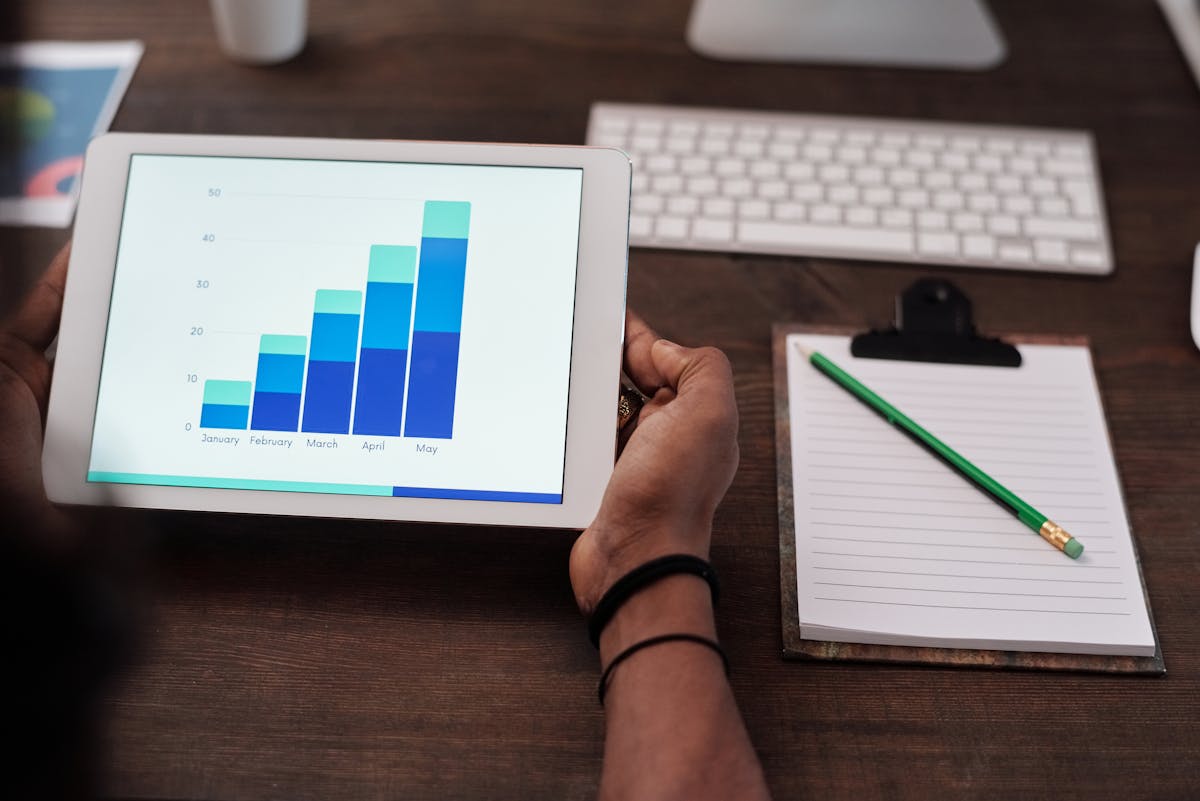
Charts get shared as images because they look persuasive, and then nobody can get the figures out of them. Extracting the text recovers the labels, the axis values, and any numbers printed on the graphic, and the summary states what the chart is claiming. That is often enough to decide whether the argument stands, and it avoids the guesswork of reading values off a picture by eye.
Read an image
Figures recovered from a chart shared as an image
AI Image Summarizer

AI Image Summarizer

@image-summarizer

Long Screenshots of Discussions and Documents

Capturing a long page in one tall screenshot is a common way to save something for later, and the result is usually unreadable and unsearchable. The text comes out as a document instead, which can be searched for a name or a decision and kept alongside your other notes. For anyone collecting information from a feed or a chat that has no export function, that conversion is the difference between saving something and losing it.
Read an image
A long screenshot converted into searchable text
AI Image Summarizer

AI Image Summarizer

@image-summarizer

Notes Photographed Before They Disappear

Whiteboards, flip charts, and lecture notes get photographed because they are about to be erased, and almost none of those photographs are ever looked at again. Reading the text out gives the material a form you can search and reorganise. Legible handwriting works; a rushed scrawl or a photo taken at an angle is where accuracy drops, and those are the pages to check by eye.
Read an image
Handwritten board notes read as text
AI Image Summarizer

AI Image Summarizer

@image-summarizer

Images in Another Language

Screenshots travel between markets, so the text inside them is often in a language the person receiving it does not read. Once the words are out of the image they can be read in a language you choose, which turns a picture you could only look at into content you can actually use. The same applies to a photographed page from a foreign document that arrived with no translation and no time to find one.
Read an image
Text from a foreign-language image read in English
AI Image Summarizer

AI Image Summarizer

@image-summarizer

Screenshots Used as a Filing System

Screenshots are how most people store small pieces of information: a booking reference, an address, a set of figures from a dashboard. They can be sorted by date and by nothing else, which makes the folder effectively random after a few months. Reading the text out of the ones that matter gives each capture a name worth searching and a body of text to copy from, which is the difference between having saved something and being able to find it again.
Read an image
Saved screenshots made searchable as text

Reading an Image

Three steps, and the text is yours to use.

Step 1

Upload the image

Add the screenshot, chart, or photograph from your device. There is nothing to crop or prepare beforehand.

Step 2

Read the text and the summary

The extracted text comes back as selectable words, and the summary explains what the content is saying. The text is where the exact figures and names live.

Step 3

Copy it where you need it

Move the text into your notes, a document, or a spreadsheet. The image stays in your history if you need to check something against it later.

Pictures Full of Words

The information people receive as images and then cannot do anything with.

GO

Grace Okonkwo

Business Analyst

A chart from a deck becomes a table I can put straight into the model.

FB

Felix Braun

Student

Photographs of the board turn into notes I can actually search the night before an exam.

NK

Nina Kowalczyk

Design Lead

Long screenshots of threads finally became searchable instead of a folder of images.

Screenshots and Photographs

What an image can and cannot give you once it has been read.

Read the text in an image

Upload the screenshot or photograph and get both the text inside it and a summary of what it says.

Read an image
What a Picture Does Not Say

Reading an image returns the words, not the context around them.

Cropped screenshots lose what came before and after, and faint print or rushed handwriting introduces errors. Check the source image for anything you plan to act on, and be careful with images containing personal or confidential information.